Lab Grown Diamonds: The Complete Buying Guide
Lab grown diamonds have become one of the most searched and discussed choices in modern fine jewelry. Buyers looking for a diamond engagement ring, wedding ring or custom jewelry increasingly consider lab created diamonds because they offer real diamond beauty, excellent quality options and greater flexibility when choosing carat size, color and clarity.
But what exactly is a lab grown diamond? How is it made? Is a lab diamond a real diamond? What is the difference between CVD and HPHT diamonds? And what should you check before buying one?
This complete guide explains everything you need to know before choosing a lab grown diamond.
What Is a Lab Grown Diamond?
A lab grown diamond is a diamond created under controlled laboratory conditions using technology designed to reproduce the conditions in which diamonds form.
Lab grown diamonds have the same fundamental carbon crystal structure as mined diamonds and can display the brilliance, fire and durability buyers expect from diamond jewelry.
They are also commonly called:
Lab created diamonds
Laboratory grown diamonds
Lab diamonds
Man made diamonds
Cultivated diamonds
CVD diamonds
HPHT diamonds
The term lab grown diamond should not be confused with diamond simulants such as cubic zirconia.
Are Lab Grown Diamonds Real Diamonds?
Yes. A lab grown diamond is a diamond rather than a diamond imitation.
Both mined and laboratory grown diamonds are primarily composed of crystallized carbon. They can be evaluated using the familiar diamond quality factors of cut, color, clarity and carat weight.
To the unaided eye, a high-quality lab grown diamond can look visually comparable to a high-quality mined diamond of similar specifications.
Lab Grown Diamond vs Natural Diamond
The main difference is their origin.
A natural diamond forms in the earth over geological timescales, while a lab grown diamond is produced using specialized technology in a controlled environment.
When comparing lab grown diamonds and natural diamonds, buyers commonly evaluate:
Origin
Price
Carat size
Cut quality
Color
Clarity
Certification
Personal preferences
Jewelry design
For many shoppers, lab grown diamonds make it possible to consider a larger center stone or higher color and clarity combination within a particular jewelry budget.
How Are Lab Grown Diamonds Made?
Two major technologies are commonly used to create laboratory grown diamonds:
CVD Lab Grown Diamonds
CVD stands for Chemical Vapor Deposition.
During the CVD process, a diamond seed is placed inside a controlled chamber. Carbon-containing gases are introduced and carbon gradually forms diamond crystal material on the seed.
CVD technology is widely used for producing gem-quality lab grown diamonds.
HPHT Lab Grown Diamonds
HPHT stands for High Pressure High Temperature.
This process recreates extremely high-pressure and high-temperature conditions used to form diamond crystal material.
Both CVD and HPHT can produce high-quality diamonds suitable for fine jewelry.
The growth method alone should not determine whether a diamond is good or bad. The finished diamond's cut, color, clarity, proportions and overall appearance remain important.
CVD vs HPHT Diamond: Which Is Better?
There is no universal rule that CVD is always better than HPHT or that HPHT is always better than CVD.
A well-cut diamond produced using either method can be beautiful.
Instead of choosing only by production method, evaluate the individual stone.
Consider:
Diamond cut quality
Color grade
Clarity grade
Carat weight
Measurements
Proportions
Certification
Visual appearance
The right diamond is the stone that provides the combination of beauty, specifications and value you want.
Understanding the 4Cs of Lab Grown Diamonds
Just like mined diamonds, lab grown diamonds are commonly evaluated using the 4Cs.
Cut
Cut strongly influences how a diamond interacts with light.
A beautifully cut diamond can appear bright, lively and brilliant. When buying a round brilliant or another precision-cut shape, do not focus only on carat weight.
A well-proportioned diamond can often look more impressive than a larger stone with less attractive proportions.
Color
Diamond color grades generally describe how colorless or tinted a diamond appears.
Many buyers prefer near-colorless or colorless-looking diamonds for engagement rings, especially when using white gold or platinum-style settings.
Yellow gold and rose gold settings can also complement a wider range of diamond color grades.
Clarity
Clarity evaluates internal characteristics and surface features.
Many buyers look for an eye-clean diamond rather than simply choosing the highest clarity grade available.
Depending on the stone and size, VS or similar clarity ranges can offer an attractive balance between appearance and specifications.
Carat Weight
Carat refers to diamond weight.
A 2 carat lab grown diamond does not always appear exactly the same size as every other 2 carat diamond because dimensions, proportions and shape affect visible spread.
Always review the diamond's measurements along with its carat weight.
Popular Lab Grown Diamond Shapes
Lab grown diamonds are available in many shapes, including:
Round cut
Oval cut
Emerald cut
Radiant cut
Pear cut
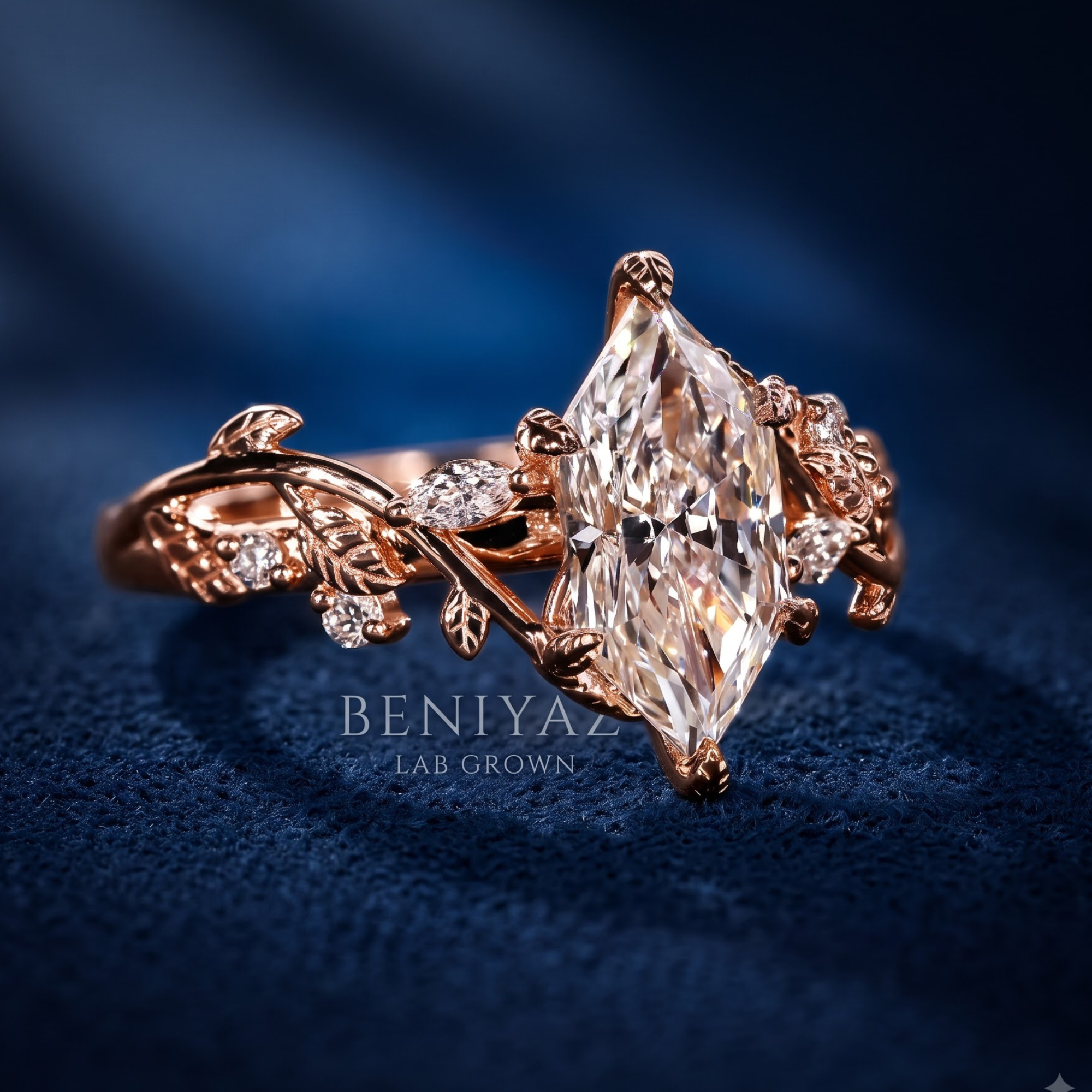
Marquise cut
Cushion cut
Princess cut
Asscher cut
Heart cut
Round brilliant diamonds remain a classic choice, while oval, emerald, radiant, pear and marquise diamonds are especially popular for distinctive engagement ring designs.
Lab Grown Diamond Engagement Rings
A lab grown diamond engagement ring can be created in almost any traditional or contemporary setting.
Popular styles include:
Solitaire engagement rings
Hidden halo rings
Three stone rings
Bezel set engagement rings
Vintage inspired rings
Art Deco engagement rings
East west diamond rings
Pavé engagement rings
Cathedral settings
Custom engagement rings
Choosing the right setting is just as important as selecting the center diamond because the setting influences the final appearance, profile and overall personality of the ring.
Lab Grown Diamond Wedding Bands
Lab grown diamonds are also widely used in wedding bands.
Popular options include:
Diamond eternity bands
Half eternity bands
Pavé wedding bands
Flush set diamond bands
Bezel set diamond bands
Curved wedding bands
Contour bands
Mixed cut diamond bands
When pairing a wedding band with an engagement ring, consider the height, width, profile and shape of both rings.
What Does Lab Grown Diamond Certification Mean?
A diamond grading report provides information about the individual diamond.
Depending on the grading laboratory and report, information may include:
Carat weight
Diamond measurements
Color grade
Clarity grade
Cut information
Polish
Symmetry
Fluorescence
Proportions
Identification details
IGI certified lab grown diamonds are commonly seen in the laboratory grown diamond market.
Before purchasing a certified lab grown diamond, compare the grading report with the actual diamond and jewelry specifications.
What Is an IGI Certified Lab Grown Diamond?
IGI stands for International Gemological Institute.
An IGI grading report can document important characteristics of an individual diamond.
For buyers considering a larger center diamond or an engagement ring, having a recognized grading report can make it easier to understand and compare the stone's specifications.
Certification should be considered together with visual quality rather than as the only reason to select a diamond.
How Much Do Lab Grown Diamonds Cost?
Lab grown diamond pricing can vary significantly.
Factors influencing price include:
Carat weight
Diamond shape
Cut quality
Color
Clarity
Certification
Measurements
Supply and market conditions
A larger carat number does not automatically mean a better diamond.
Compare the complete specification of the stone instead of evaluating price based only on carat weight.
How to Choose the Best Lab Grown Diamond
Before purchasing, follow this checklist:
Choose your preferred diamond shape.
Decide the approximate carat range you want.
Compare measurements rather than only carat weight.
Prioritize an attractive cut and overall appearance.
Select a color grade appropriate for your setting.
Look for clarity that appears clean to the eye.
Review the diamond grading report when available.
Choose a setting that protects and complements the diamond.
Confirm ring size before ordering.
Compare the finished ring design, not only the loose diamond.
Lab Grown Diamonds for Custom Jewelry
One major advantage of custom jewelry is the ability to select the diamond and setting together.
A custom lab grown diamond ring can be designed around:
A particular diamond shape
A specific carat size
A vintage inspiration
An Art Deco motif
A bezel setting
A hidden halo
A personalized engraving
A unique wedding band pairing
Custom design can be particularly useful when you want proportions or details that are difficult to find in mass-produced jewelry.
Are Lab Grown Diamonds Good for Engagement Rings?
For buyers who specifically want a diamond, lab grown diamonds can be an excellent option for engagement jewelry.
They allow couples to choose from many diamond shapes, carat weights, colors and clarity grades while exploring classic or highly personalized ring designs.
The best choice ultimately depends on personal priorities, design preference and budget.
How to Care for a Lab Grown Diamond Ring
Regular care helps keep diamond jewelry bright.
Use mild soap, warm water and a soft brush for routine cleaning when appropriate for your jewelry.
Avoid aggressive chemicals and inspect prongs, bezels and pavé settings periodically.
For valuable or frequently worn jewelry, professional inspection can help identify loosened stones or setting wear before they become larger problems.
Explore Lab Grown Diamond Jewelry at Beniyaz Lab Grown
Beniyaz Lab Grown focuses on distinctive lab grown diamond jewelry, including engagement rings, wedding bands, personalized signet rings, vintage-inspired jewelry, Art Deco designs and custom pieces.
Explore our engagement rings, wedding bands and custom jewelry collections to discover designs created around modern craftsmanship and individual style.
Whether you are searching for a classic solitaire, an east-west diamond ring, vintage-inspired engagement ring, personalized signet ring or completely custom design, the right piece starts with understanding the diamond and choosing a design that feels personal.
Frequently Asked Questions About Lab Grown Diamonds
Is a lab grown diamond a real diamond?
A lab grown diamond is diamond material created in a controlled laboratory environment rather than mined from the earth.
Can a lab grown diamond be certified?
Yes. Laboratory grown diamonds may be graded by gemological laboratories such as IGI.
What is the difference between CVD and HPHT diamonds?
CVD and HPHT are two different technological methods used to grow diamond crystal material.
What is the best lab grown diamond for an engagement ring?
There is no single best specification for everyone. Focus on shape, cut, visual appearance, color, clarity, carat weight, measurements, certification and the final ring design.
Are lab grown diamonds available in large carat sizes?
Yes. Lab grown diamonds are available across a wide range of carat weights and shapes.
Can I create a custom lab grown diamond engagement ring?
Yes. Custom jewelry allows the center stone, setting style, metal, proportions and design details to be selected around your preferences.